
Walkway
OVERVIEW
A navigation app for people who move through cities without cars, because right now, most navigation tools treat pedestrians like an afterthought.
Team
Lead Designer and Researcher // Denisse Mari Aguilar
Designer // Qi Wang
Designer // Kwan Hei Kan
CONTEXT
Being a pedestrian in a u.s. major city
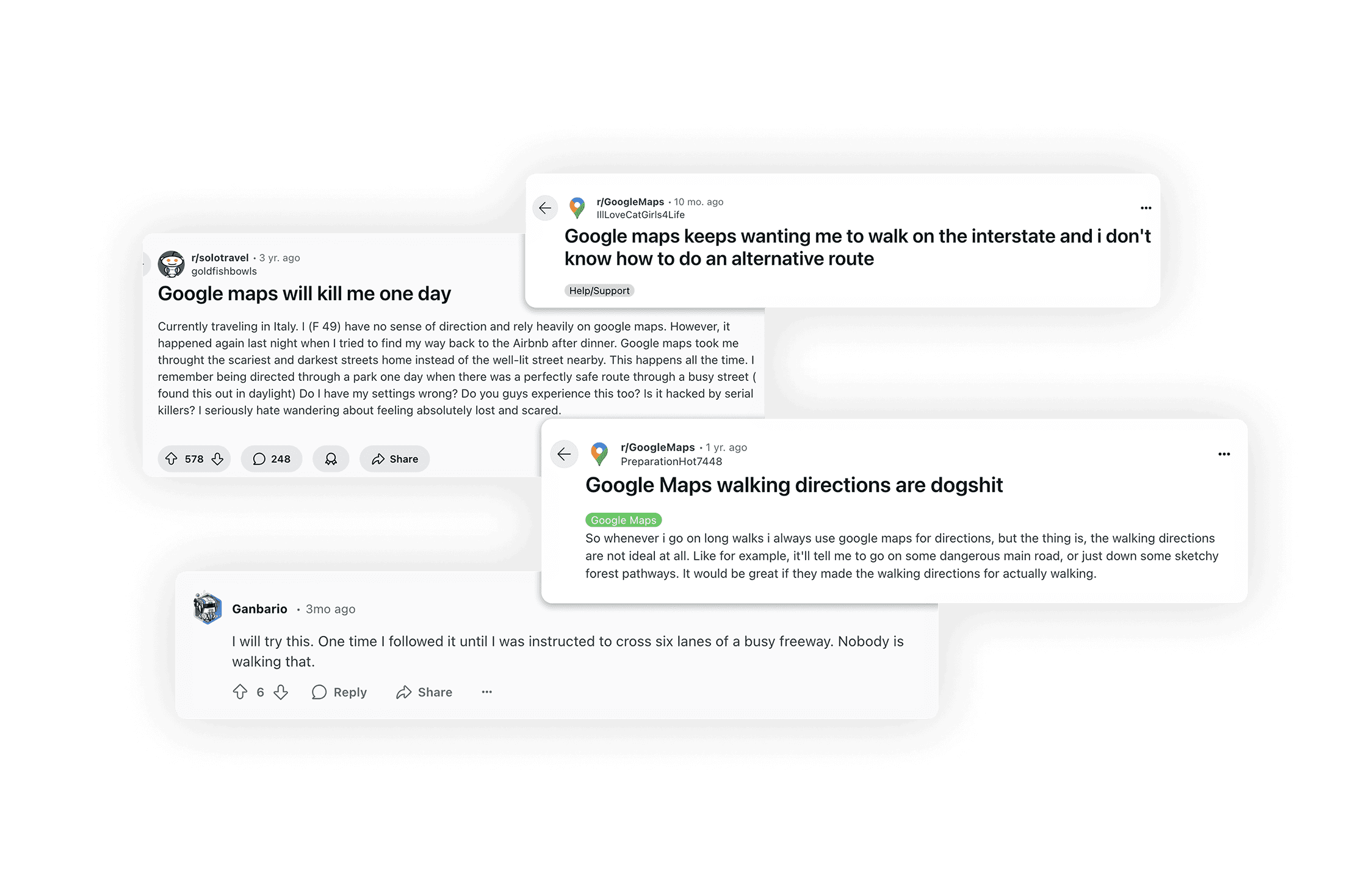
One winter break in LA, my navigation app told me to walk straight to a bus stop—only to realize it was on a freeway above me, with no stairs or signs in sight.
PROBLEM
Most cities weren’t designed for pedestrians—they were designed for traffic
And navigation apps, which only direct you to the quickest route without regards for if sidewalks exist in the first place, reflect this.
SOLUTION
Crowdsourced navigation for safer walking
From the real experiences of pedestrians, so people can flag hazards, mark safe, accessible paths, and share useful tips.

FEATURES
ADMIN DASHBOARD
Onboarding
WalkWay lets users set needs (like ramps or curb cuts) and preferences (like shade or quiet streets), ensuring routes are both accessible and enjoyable.


TASK LISTS
Community Reports
Community reports let people avoid sidewalks flagged for construction or broken pavement, while also surfacing details like shaded paths, lighting, and ramps. This ensures walks are not only safer and more accessible, but also more enjoyable.

CLOCK IN / CLOCK OUT
Turf Wars
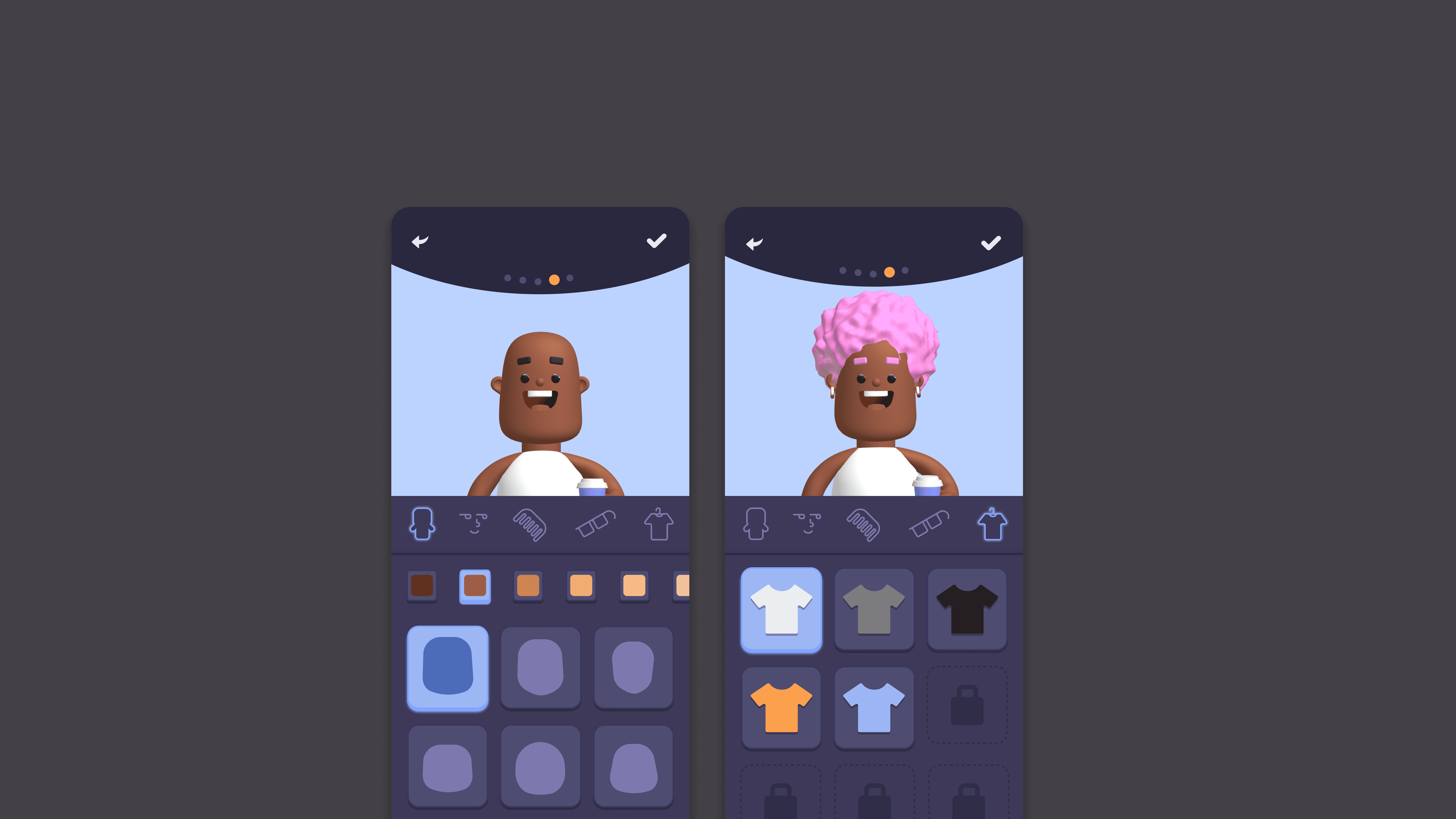
We avoided cash incentives to protect data quality and trust—this isn’t a gig app but a civic tool. Instead, contributions are encouraged through lightweight gamification: users earn points for rating routes and reporting hazards, with rewards like transit passes, avatar cosmetics, and even local leaderboards that turn neighborhoods into friendly turf wars. By “claiming” areas through participation, walkability becomes a shared, slightly competitive effort—more civic Pokémon Go than gig economy.
REFLECTIONS
TAKEAWAYS
Designing for perception
Walkway challenged me to see safety as subjective—shaped by culture, memory, and bias, not just lighting or signage.
Equity as a design lens
I learned that designing for safety means asking whose comfort is being centered and who gets left out.
process Under Pressure
Tight timelines pushed me to share messy drafts, refine fast, and trust collaboration over perfection.
IF GIVEN MORE TIME…
Real-world validation
I’d love to see how different users interpret “safe routes” in their own neighborhoods where perception meets reality.
Benchmark & Iteration
Comparing Walkway against existing apps could reveal how our design choices subtly reinforce—or challenge—bias.